

Septic Tank Repair and Replacement in Metro Detroit
Drain Detectives repairs, replaces, and installs septic systems across Macomb, Oakland, Wayne, and southern St. Clair County. Failing tanks, collapsed baffles, damaged distribution boxes, broken lines, and drain field problems, diagnosed properly before anything gets quoted. We are a licensed, bonded, and insured plumbing company based in Fraser, Michigan.
We do not pump, clean, or empty septic tanks. That is a separate licensed service and we will point you at it. What we do is fix and replace the system itself.
- Repairs & replacement
- New installation
- Excavation in house
- Licensed, bonded, insured
- Residential & commercial
Sewage backing up or surfacing in the yard? Stop using water in the building, keep people and pets away from any standing sewage, and call. That is a health hazard as well as a plumbing failure.
What We Do and What We Do Not
Septic work splits into two trades that get confused constantly. Knowing which one you need saves you a wasted call, so here is exactly where we sit.
What we handle
- Septic tank repair, including baffles, lids, risers, and structural damage
- Full septic system replacement
- New septic system installation
- Distribution box repair and replacement
- Broken, crushed, or root-damaged septic lines
- Drain field diagnosis and repair work
- The sewer line running from the house to the tank
- Excavation, backfill, and site restoration
What we do not handle
- Septic tank pumping
- Septic tank cleaning or emptying
- Septic cleanouts and routine tank maintenance
- Waste hauling of any kind
Pumping is a licensed waste hauling service with its own equipment and its own regulations. If your tank simply needs emptying on schedule, you want a licensed septic pumper rather than a plumber, and we would rather tell you that now than send a truck for it.
If you are not sure which you need, call and describe what is happening. A tank that needs pumping and a tank that has failed produce similar symptoms, and working out which one you have is free over the phone.
What a Failing Septic System Looks Like
| What you notice | What it usually means | Urgency |
|---|---|---|
| Slow drains throughout the house | The system is not accepting flow, from a full tank, a blockage, or a saturated field | Diagnose soon |
| Sewage backing up indoors | The system cannot discharge at all. Tank, line, or field failure | Urgent |
| Standing water or soggy ground over the field | Effluent surfacing because the field is no longer absorbing it | Urgent, and a health issue |
| Unusually green, fast-growing grass over the field | The field is leaking nutrients upward. An early warning rather than an emergency | Diagnose soon |
| Sewage odour outdoors near the tank or field | Surfacing effluent, a damaged lid, or a venting problem | Diagnose soon |
| Gurgling drains and slow toilets together | Restriction between the house and the tank, or a full system | Diagnose soon |
| A depression or soft spot forming in the yard | Possible tank or line collapse under the surface | Urgent. Keep vehicles and people off it |
| It backs up again shortly after a pumping | The tank was not the problem. Usually the field or the line | Diagnose. Repeat pumping is money spent on a symptom |
What Actually Fails in a Septic System
-
The tank itself
Concrete tanks crack and deteriorate over decades. Older steel tanks rust through, and a corroded lid is a genuine safety hazard rather than an inconvenience. Repairable in some cases, replacement in others.
-
Baffles and tees
These keep solids in the tank and out of the drain field. When a baffle fails, solids start reaching the field, which is how a repairable problem turns into an expensive one. Often replaceable on their own.
-
The distribution box
Splits effluent evenly across the field lines. When it cracks, shifts, or clogs, one part of the field takes everything and fails early while the rest sits unused. Frequently the cheapest meaningful repair on a struggling system.
-
The drain field
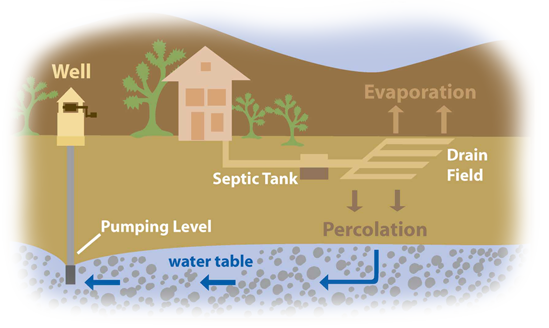
The expensive one. Fields fail when solids reach them, when they are hydraulically overloaded, or simply with age as the soil loses its ability to absorb. Diagnosis matters enormously here, because field replacement is the largest cost in septic work.
-
The line from house to tank
Ordinary sewer pipe with ordinary sewer problems: root intrusion, offsets, bellies, and crushing. This one often looks like a septic failure and is not. A camera settles it.
-
Lids, risers, and access
Buried or deteriorated lids make every future service more expensive and are a safety risk around children and equipment. Adding risers to grade is a small job that pays for itself.
Septic Rules Here Are County Rules, Not City Rules
This trips people up, because it works differently from every other kind of plumbing permit.
- Michigan has no single statewide septic code. It is the one state that regulates onsite wastewater through local and county health departments rather than a uniform state code. What is permitted in one county may be handled differently in the next.
- Your permit comes from the county health department, not the city building department that handles your water heater or sewer permit. Macomb, Oakland, Wayne, and St. Clair each run their own program with their own requirements and fees.
- New systems and most replacements require a soil evaluation. The county assesses whether and how the ground can absorb effluent, and that determines what system you are allowed to install and where.
- Some communities require an inspection at point of sale. Requirements vary, so if you are buying or selling a property on septic, confirm with the relevant county health department early rather than during closing.
We work through the county process as part of the job. If you are early in planning, ask us what your county is likely to require before you budget for it.
How That Decision Gets Made
-
Find out what failed first
A cracked distribution box, a collapsed baffle, and a saturated drain field produce overlapping symptoms and wildly different costs. Nobody should be quoting a replacement before establishing which one you have.
-
Component repairs are often enough
Baffles, tees, lids, risers, distribution boxes, and damaged lines are all repairable in isolation. Plenty of systems written off as failed had one component at fault.
-
Drain field failure is the real fork
If the field has genuinely stopped absorbing, that is where the money is, and no amount of tank work changes it. This is the point at which replacement enters the conversation honestly.
-
Age and county requirements matter
An old system needing significant work may not be economic to patch, and county rules may require bringing it up to current standards anyway. We will tell you where that line sits for your system.
What drives the cost
- Whether it is a component repair, a partial replacement, or a full system
- Tank size, depth, and how accessible it is for excavation
- Whether the drain field is involved, which is the largest single variable
- County permit and soil evaluation requirements
- What is on top of it: lawn, driveway, mature landscaping, or structures
- Restoration scope once the work is finished
We charge a service call fee to come out, diagnose the problem, and quote it, and that fee is applied to the work if you go ahead. You approve the price before anything starts. We do not offer free estimates, because a free estimate on a buried system is a guess rather than a diagnosis.
Where Septic Systems Are Around Here
Most of Macomb, Oakland, and Wayne County is on municipal sewer, which is why septic work is a smaller part of what we do than drains and sewers. Where it comes up is in the outer townships and rural areas that were never connected.
- Northern and eastern Macomb County. Washington Township, Ray Township, Bruce Township, Armada, Richmond, and Lenox areas.
- Northern Oakland County. Addison, Oakland Township, Brandon, Groveland, Holly, Rose, and Springfield townships.
- Rural St. Clair County. The townships outside the cities, including the areas around China, Casco, Columbus, and Berlin.
- Older properties in built-up areas. Occasionally a property inside a sewered community is still on its original system, usually because it predates the sewer going in.
If you are not sure whether your property is on septic or sewer, the county health department will have a record for most systems, and we can usually tell from a site visit.
Septic Repair Near You
We work throughout Macomb, Oakland, Wayne, and southern St. Clair County from our Fraser base.
- Macomb County
- Shelby Township
- Clinton Township
- Sterling Heights
- Mount Clemens
- St. Clair
- Troy
- Fraser
- All locations served
Drain Detectives
18260 Malyn Blvd, Fraser, MI 48026
Macomb County: (586) 296-0036
Oakland County: (248) 645-2448
Hours: 24 hours a day, 7 days a week, including holidays
Licensed, bonded, and insured
What Connects to Septic Work
Septic Repair FAQ
Do you pump or clean septic tanks?
No. We do not provide septic tank pumping, cleaning, emptying, cleanouts, or routine tank maintenance. Those are licensed waste hauling services with their own equipment and regulations. We repair, replace, and install the system itself. If your tank needs emptying on schedule, you want a licensed septic pumper, and we would rather say so than take the call.
My tank was pumped and it backed up again. What now?
Then the tank was probably not the problem. When a system backs up shortly after pumping, the usual causes are a failing drain field, a blocked or damaged line between the house and the tank, or a distribution box that has stopped splitting flow properly. Repeat pumping treats the symptom. Diagnosing which component actually failed is what stops it recurring.
How much does septic repair cost?
It depends enormously on what failed. A distribution box or a baffle is a modest repair. A drain field replacement is the largest job in septic work, and everything in between exists. Depth, access, what sits on top of the system, and county permit and soil evaluation requirements all move the number. We diagnose before quoting and you approve the price before work starts.
Who issues septic permits in Michigan?
Your county health department, not the city building department that handles other plumbing permits. Michigan is the one state without a single statewide septic code, so onsite wastewater is regulated locally and requirements differ between Macomb, Oakland, Wayne, and St. Clair County. We work through that process as part of the job.
How do I know if it is the tank or the drain field?
Symptoms overlap, which is exactly why diagnosis matters. Soggy ground, standing water, or unusually lush grass over the field points at the field. Backups with no surface signs point more toward the tank, the line, or the distribution box. A system that fails again soon after pumping usually means the field. We establish which before quoting anything, because the cost difference is very large.
Can a septic system be repaired, or does it always need replacing?
Very often repaired. Baffles, tees, lids, risers, distribution boxes, and damaged lines are all serviceable in isolation, and plenty of systems written off as failed had one component at fault. Genuine drain field failure is the point at which replacement becomes the honest answer, and we will tell you when you are there rather than before.
How long does a septic system last?
Decades with reasonable use and regular pumping by a licensed hauler, though tank material, soil conditions, household size, and what gets flushed all affect it. Solids reaching the drain field is what shortens a system's life more than anything else, which is why a failed baffle is worth catching early.
Do you install new septic systems?
Yes, alongside repair and replacement, and we handle the excavation ourselves. New installations require a county soil evaluation and permit, which determines the system type and placement. Talk to us early if you are planning, because those requirements shape the budget.
Is a sewage backup on a septic system an emergency?
Yes. Sewage indoors or surfacing in the yard is a health hazard as well as a plumbing failure. Stop using water in the building, keep people and pets away from any standing sewage, and call. See emergency plumbing.
Get Your Septic System Diagnosed
Tell us what it is doing, how long it has been doing it, and when the tank was last pumped. That is usually enough for us to tell you whether you are looking at a component repair or something larger.
Get A Free Quote
Contact Us Page

24 Hour Emergency Plumbing Service Call (586) 296-0036 or (248) 645-2448


Current Coupons